17.06.2025
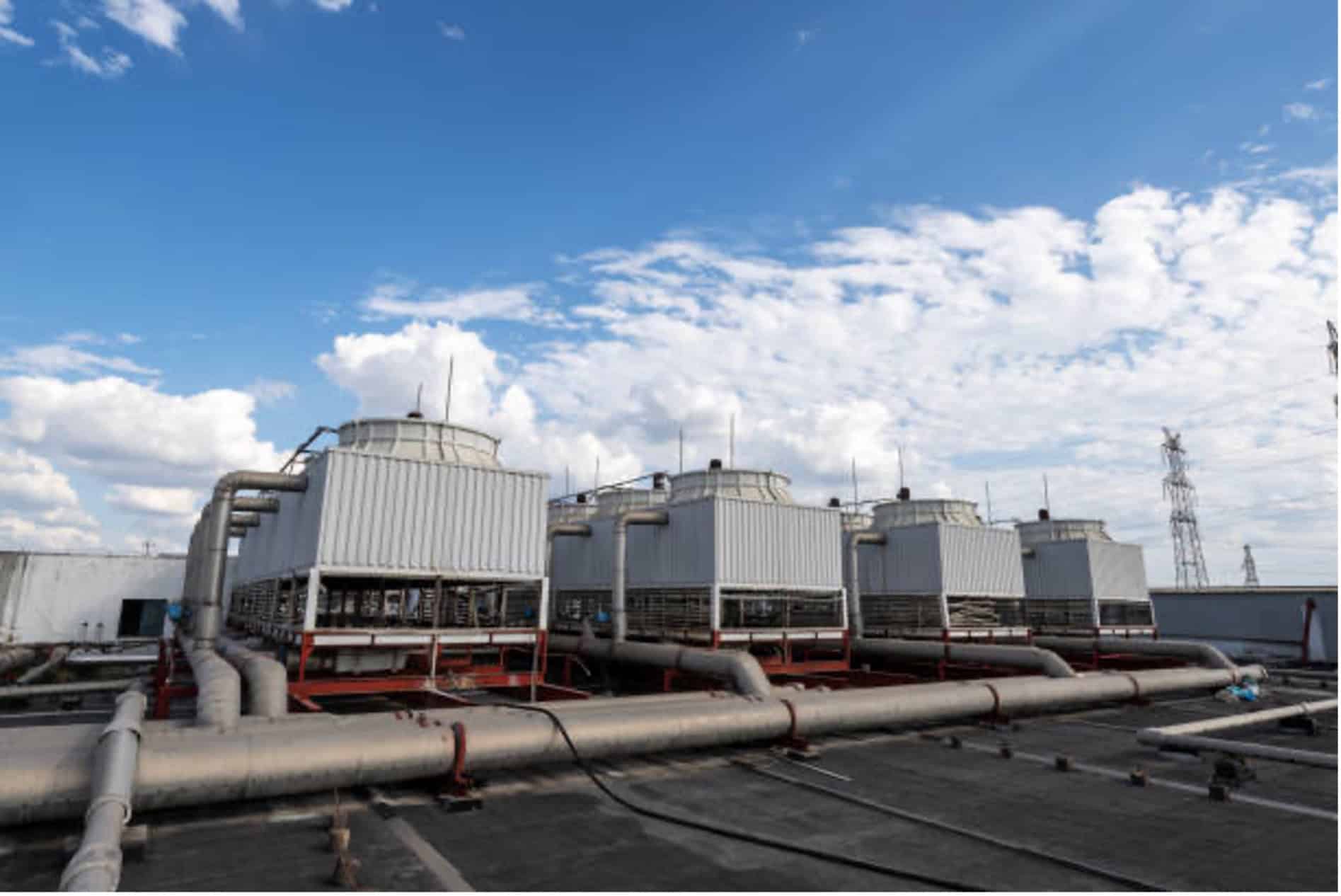
Prevention of Biological Fouling in Cooling Towers:
In industrial plants, cooling towers are critical for continuity and efficiency of the process. One of the most important problems in these systems is…
 Request a quote
Company
About usDealershipCertificatesReferencesBlogSearch the siteContact
+90 (216) 573 4014[email protected]Water on the Earth
According to the big-bang theory, a hydrogen (H+) atom formed in the early period of the formation of the universe. Later, an oxygen (O-2) atom formed in star cores, together with many kinds of atoms. The joining of these two atoms formed the water (H2O: dihydrogen monoxide) molecule. In the first formation stages of the Earth, the surface temperature was too high for water to remain. After the Earth formed and started to cool, water reached our Earth in asteroids and icy stars that struck the Earth. The adventure of the Earth with water then started. 71% of the Earth's surface is covered with water. Even so, the ratio of the Earth to the mass of water found on the Earth is about as large as 4×10¹⁸. 97% of the water on the Earth is salt water. 3% is fresh water. About 70% of the fresh-water sources on the surface is locked in ice. That ice is the polar cover and glaciers, ice and snow on mountain tops, and frozen soil. These water sources cannot be reached, so they cannot be used. This drops the usable amount of water on the Earth to 1% for us. 74% of this 1% is used in agriculture, 15% in domestic use, and 11% in industry.
General properties of water:
The formula of water, H2O, by itself shows only the content of water and the molecular weight. As said above, the water molecule forms by an exothermic (heat-releasing) reaction between hydrogen and oxygen molecules. Water is found as vapor in the atmosphere, and it is also found in liquid and solid state.
Solvent;
In the unique molecule arrangement of water, the oxygen atom sits next to two hydrogens, with an angle of 105o between the two hydrogens. The water molecule has an asymmetric structure. The hydrogen side is positively charged and the oxygen side is negatively charged. This makes the water bipolar, that is two-poled (opposite charges at the opposite ends of the molecule). Because of this polarity, many substances dissolve in water. Water is very rarely pure in nature. It can dissolve many inorganic and organic compounds. Many other compounds, such as oils, do not dissolve in water. Water molecules surround charged particles and draw them into the solution. Take sodium chloride (NaCl) as an example. Water molecules enter the crystal lattice and find a path between the ions. They surround the sodium and chloride ions and dissolve the salt slowly. The negative oxygen side of the water molecule surrounds the sodium ion. The positive side (the hydrogen side) surrounds the chloride ion. The released ions stay in the solution by the hydration effect. They are prevented from joining again. As another example, oil does not dissolve in water. The reason is that the molecule has a nonpolar structure, because there is no net electric charge around the molecule. Water is therefore a good solvent found in nature. Being a good solvent is a factor that acts in favor of corrosion. That is, it forms a corrosive environment.
High heat capacity;
The two-poled structure of the water molecule causes the water molecules to cluster (agresyon). The hydrogen atom of one molecule attracts the oxygen atom of the neighboring molecule (hydrogen bond). In this way, one water molecule bonds by hydrogen bonds to four adjacent water molecules. As a result of hydrogen bonding, H2O molecules do not leave the water surface easily. If this attraction between molecules did not exist, separation would occur much more readily. Breaking the hydrogen bond takes energy. Freeing one H2O molecule so that vapor forms takes more energy than for other similar chemical compounds. This leads us to three important properties in the industrial use of water. First, water vapor is an important heat source because of its high energy content. Second, water absorbs and gives off more heat than other substances. This makes water an effective heat-transfer medium. Third, when water freezes, it releases more heat than many other compounds.
Surface tension and cohesion;
Water can stay together without dispersing, because of the attraction force between its own molecules (cohesion). Because its molecules are dipoles (polarized), water can stick to many substances. The wetting property comes from this.
Water is also a substance with a high adhesion force (the attraction force between the molecules of two different substances). Because of the hydrogen bond, water molecules also attract each other, so the cohesion force between water molecules is also very high. The cohesion and adhesion abilities of water help water rise and be carried inside certain capillary structures without breaking. Capillary movement means the movement of water against gravity in a very narrow (capillary) tube or channel. This movement occurs because water sticks to the surface of the tube or channel. The water that sticks then lets more water pass over it, by the cohesion force. The process repeats until enough water has passed up the tube or channel for gravity to overcome the adhesion force. This event can also be seen in nature. For example, in the capillary vessels of trees, water can move against gravity up to the highest branches. This is also called the capillary effect. This matters for plants so that they can continue their life on land. One reason the circulation system along the root and the tissue in plants works is this capillary (narrow tube or channel) effect.
The cohesion forces at the liquid surface are stronger than those inside the liquid. Moving an object on the surface of the liquid is therefore harder than moving it when the object is fully immersed. A pin is made of steel, and its density is almost eight times the density of water. In fact the pin should not float. It should sink, because its weight is greater than the buoyant force of the water. If you place the pin carefully on the water surface, as in the picture above, you will see that it floats. The pin does not sink because it cannot break the surface tension of the water.
The cohesion substance that gives water its sek character collides with the adhesion force and makes the water more sek. Water whose molecules have become sek is then softer and purer. The sek character determines the color and the taste of the water.
Osmosis and reverse osmosis;
Pure distilled water separates into its ions at a very low rate. It forms only 10-7 mol of hydrogen and 10-7 mol of hydroxyl ion per liter. It is an insulator. It does not conduct electric current. When salts or other ionizing substances dissolve in water, electrical conductivity develops. The conductivity of waters found in nature comes from the dissolved mineral content, which varies by location. For many mains waters the conversion factor is 1.55S/cm mg/l total dissolved solids (:total dissolved solids, TDS).
Another important fact in water solutions is osmotic pressure. It is related more to the dissolved substance than to the water (that is, the solvent). If two aqueous solutions are separated by a membrane, water passes from the dilute side to the more concentrated side. This important process affects the working efficiency of living cells. The effectiveness of protecting foods with salt is explained by this process. Salt forms a strong solution that breaks the cells of organisms that could spoil the food. The water inside those organisms leaves the cell in order to dilute the concentrated salt solution outside. In specially designed membrane cells, a high enough pressure on the more concentrated solution can reverse the osmotic flow of water through the membrane. This ''reverse osmosis'' process is used to remove salt from water.
Source:
bilimgenc.tubitak.gov.tr
evrimagaci.org
The Most Beautiful History of the World, Türkiye İş Bankası/Kültür Yayınları
Water Handbook, TMMO Kimya Müjendisleri Odası
Cemkimsan Kimya lecture notes
17.06.2025
In industrial plants, cooling towers are critical for continuity and efficiency of the process. One of the most important problems in these systems is…
15.05.2025
Water has a vital importance in industrial processes. Water is used in steam boilers, cooling systems, drinking-water supply and the production line. That use…
12.02.2025
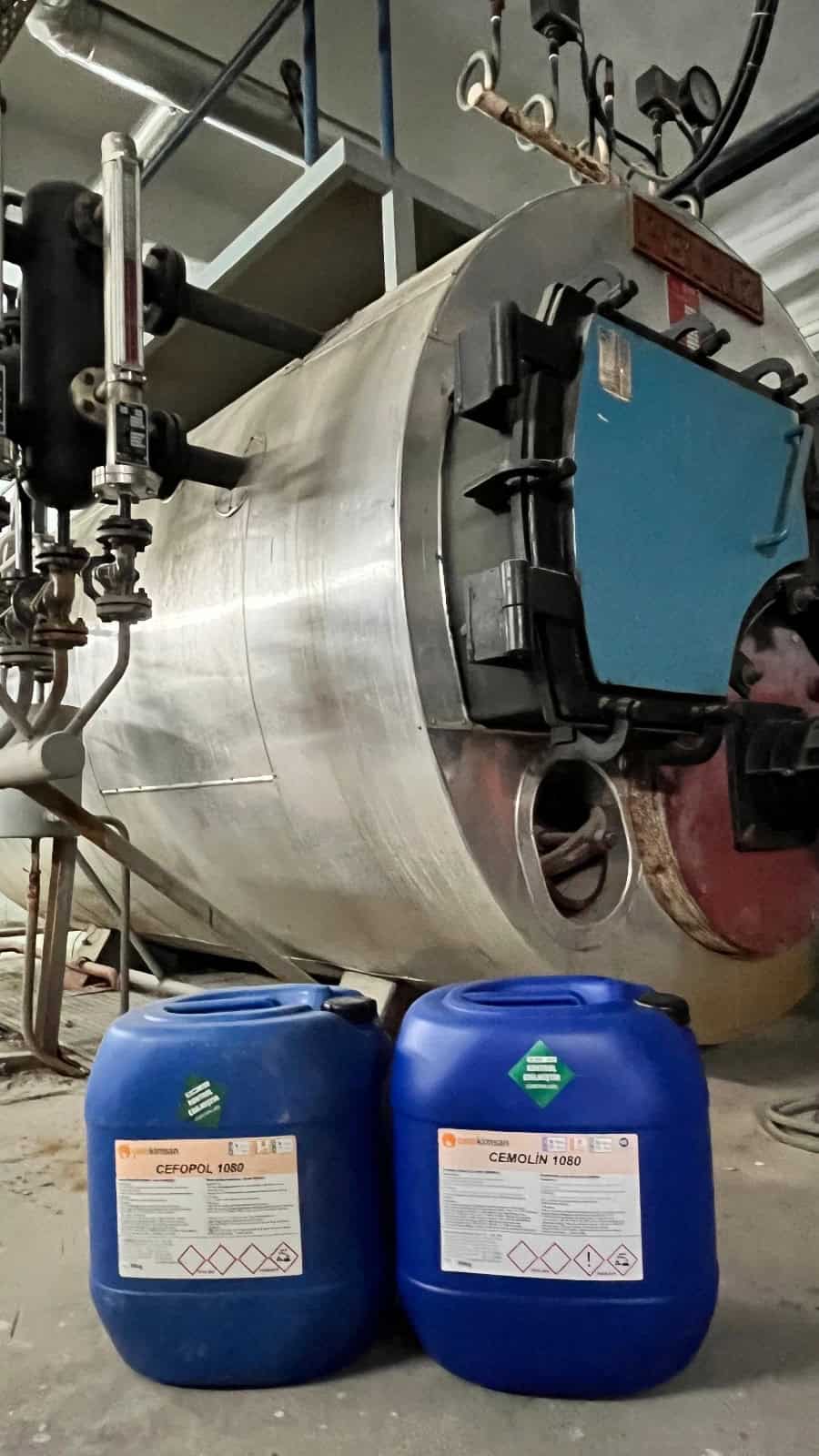
The main purpose of steam boilers is to heat water, obtain steam, and use this steam as an energy source. These boilers are usually chosen in industrial…
We help you select the correct chemical for your system
Send us your feed water analysis or your requirement. Our technical team will send you a recommendation. +90 (216) 573 4014 · [email protected]