Kiln and mill
If bearing and shell cooling stops, the equipment overheats.
 Request a quote
Company
About usDealershipCertificatesReferencesBlogSearch the siteContact
+90 (216) 573 4014[email protected]
In a cement plant, water cools the kiln, the mill and the waste-heat boiler. Dust and hardness make this water hard to manage.
Scale in a cooling tower · Scale in a steam boiler · Corrosion in a closed loop
If bearing and shell cooling stops, the equipment overheats.
Evaporation raises hardness. Dust sticks to the fill.
The closed cooling circuit of heavy equipment replaces little water. Corrosion and sludge block a narrow passage.
Heat in the kiln gas makes steam. Scale in the boiler water lowers heat transfer.
Yard dust enters the make-up water and the tower. Suspended solids stick to the hot surface.
When hard water evaporates, scale forms faster in the tower and in the boiler.
Dust and scale close the fill together. The tower cannot reject heat.
A scale layer does not pass the gas heat into the water. Steam falls, and the gas side works harder.
The scale and corrosion chemical and the dispersant work together. Dust does not leave with a scale inhibitor alone.
Read the hardness of the make-up water and the tower water on a regular schedule. Open blowdown from this data.
Put a corrosion inhibitor in the equipment circuit. If the water turns brown, flush it first.
Select the boiler chemical and the blowdown from the feed water analysis.
The tower chemical, the dispersant, the closed loop and the waste-heat boiler are separate jobs. The dosage is set from the water analysis.
Stabilized Phosphate Cooling Water Treatment Chemical
It decreases the risk of scaling and corrosion in cooling towers.
Cooling Water Dispersant
It is a dispersant for cooling towers. It prevents suspended particles and sludge from sticking to the surface.
Nitrite-Based Corrosion Inhibitor for Closed-Loop Heating and Cooling Systems – Copper Protection
It protects copper surfaces against corrosion in closed-loop heating and cooling.
Multifunctional Steam Boiler Scale and Corrosion Inhibitor – NSF Approved
It prevents scaling in the steam boiler and protects the metal against corrosion. The product is NSF approved.
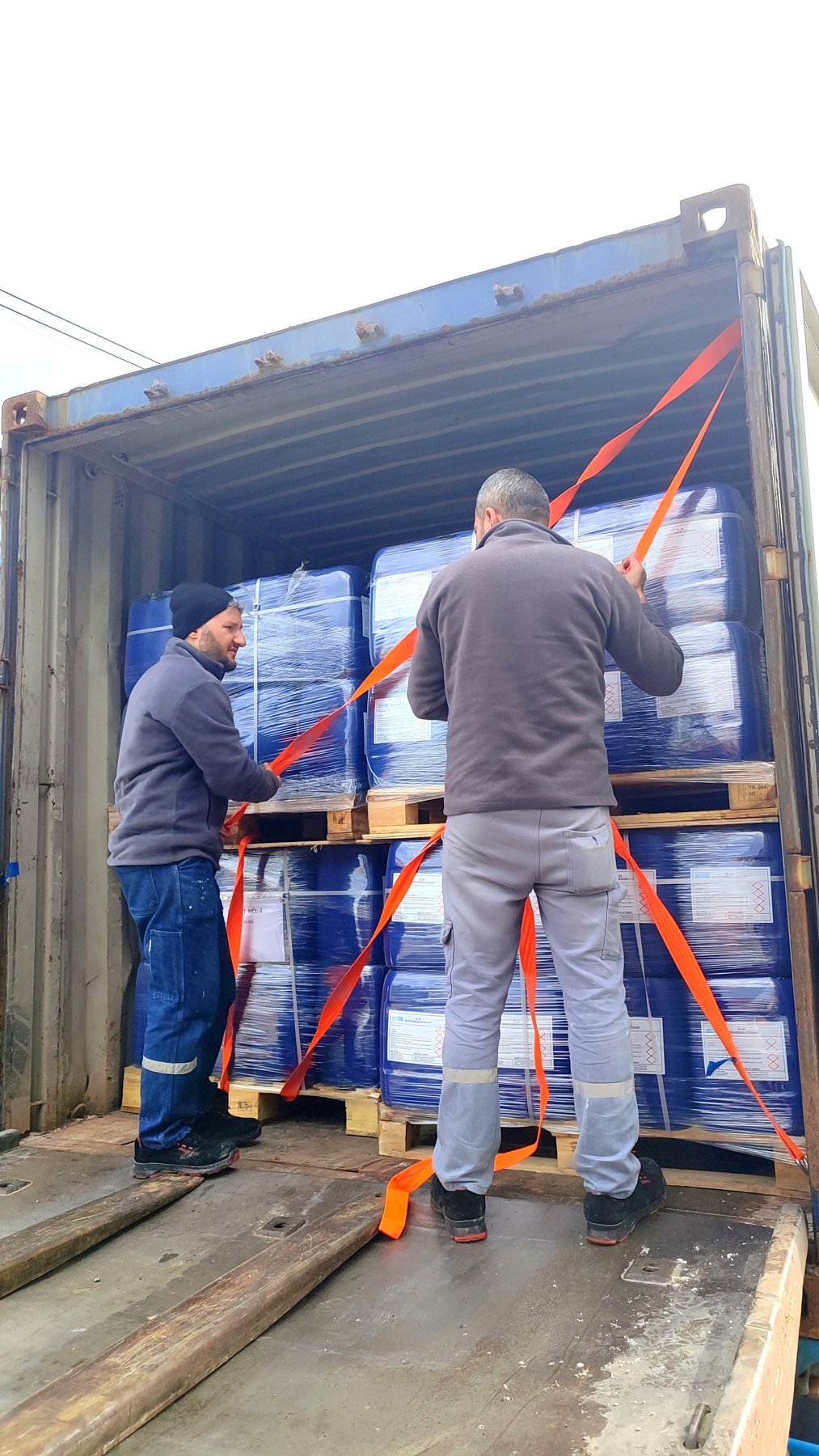
Cemkimsan makes the chemical in its own plant and loads it into the container. For your cement plant, the product is selected from the water analysis.
Ck 220 decreases the scale and corrosion risk in the tower. Ck 180 prevents suspended particles and sludge from sticking to the surface. Select the two together. Set blowdown from hardness and conductivity.
Cefopol 1040 prevents scaling in the steam boiler and protects the metal against corrosion. The product is NSF approved. The exact choice depends on the feed water analysis.
Ck 13 protects the copper surface in closed-loop heating and cooling. If the water turns brown, remove the collected dirt first, then put the inhibitor in service.
The dosage is set from the make-up water and the tower water analysis. Hardness, suspended solids and conductivity are read together.
Send the tower water analysis and the boiler feed water analysis. Our technical team will reply on the tower, the dispersant and the boiler.
We reply to quote requests within 12 hours.