Steam boiler
The boiler makes steam for cooking, heating and packaging. Scale in the boiler water lowers heat transfer.
 Request a quote
Company
About usDealershipCertificatesReferencesBlogSearch the siteContact
+90 (216) 573 4014[email protected]
In a food and beverage plant, water moves as steam, as cooling water and as process water. If the steam can touch the food or the packaging, select an NSF product. Our NSF products: Cefopol 1040, Cefolin 1087, Cemolin 1080, Ck 229, C scalant 1085 and C scalant 2005.
Scale in a steam boiler · Scale in a cooling tower · Corrosion in a closed loop · Scale and fouling on the membrane · What is an antiscalant
The boiler makes steam for cooking, heating and packaging. Scale in the boiler water lowers heat transfer.
Steam travels in the line. If the line corrodes, condensate and steam quality get worse.
Process cooling runs in a tower or in a closed loop. Scale, corrosion and sludge stop the cooling.
Process water and drinking water are made with a membrane. Hardness and silica foul the membrane.
If steam can touch the food or the packaging, dirt from the boiler can reach the product.
The plant keeps a record of the chemical used in water and steam that can touch the food.
Biofilm in an open cooling tower raises the Legionella risk. C biocide 886 lowers that risk in open cooling.
Scale, a blocked tower or a tired membrane stops the line.
For water and steam that can touch food or packaging, select the NSF product. This approval covers six products.
Read hardness, silica, iron and pH in the feed water. Select the product from this data.
The tower and the closed loop need separate programs. The NSF cooling product is Ck 229.
The antiscalant dosage is set from a projection report of the feed water analysis.
NSF approval is on these products: Cefopol 1040, Cefolin 1087, Cemolin 1080, C scalant 1085, C scalant 2005 and Ck 229. The dosage is set from the water analysis.
Multifunctional Steam Boiler Scale and Corrosion Inhibitor – NSF Approved
It is an NSF approved boiler chemical. It prevents scaling in the boiler water and protects the metal against corrosion.
Multifunctional Boiler Water Treatment Chemical – NSF approved
It is an NSF approved boiler water chemical. It stabilizes hardness and prevents scaling.
Steam Line Corrosion Inhibitor – NSF approved
It is an NSF approved steam-line inhibitor. It decreases the corrosion risk in the line.
Stabilized Phosphate Cooling Water Treatment Chemical – For Copper (NSF APPROVED)
It is an NSF approved cooling-water chemical. It contains stabilized phosphate for copper and prevents scale and corrosion.
NSF-approved antiscalant
It is an NSF approved antiscalant. It protects the drinking and domestic water reverse osmosis membrane against scaling and fouling.
NSF-approved antiscalant for drinking water
It is an NSF approved, high-concentration antiscalant. It also protects the membrane at high hardness.
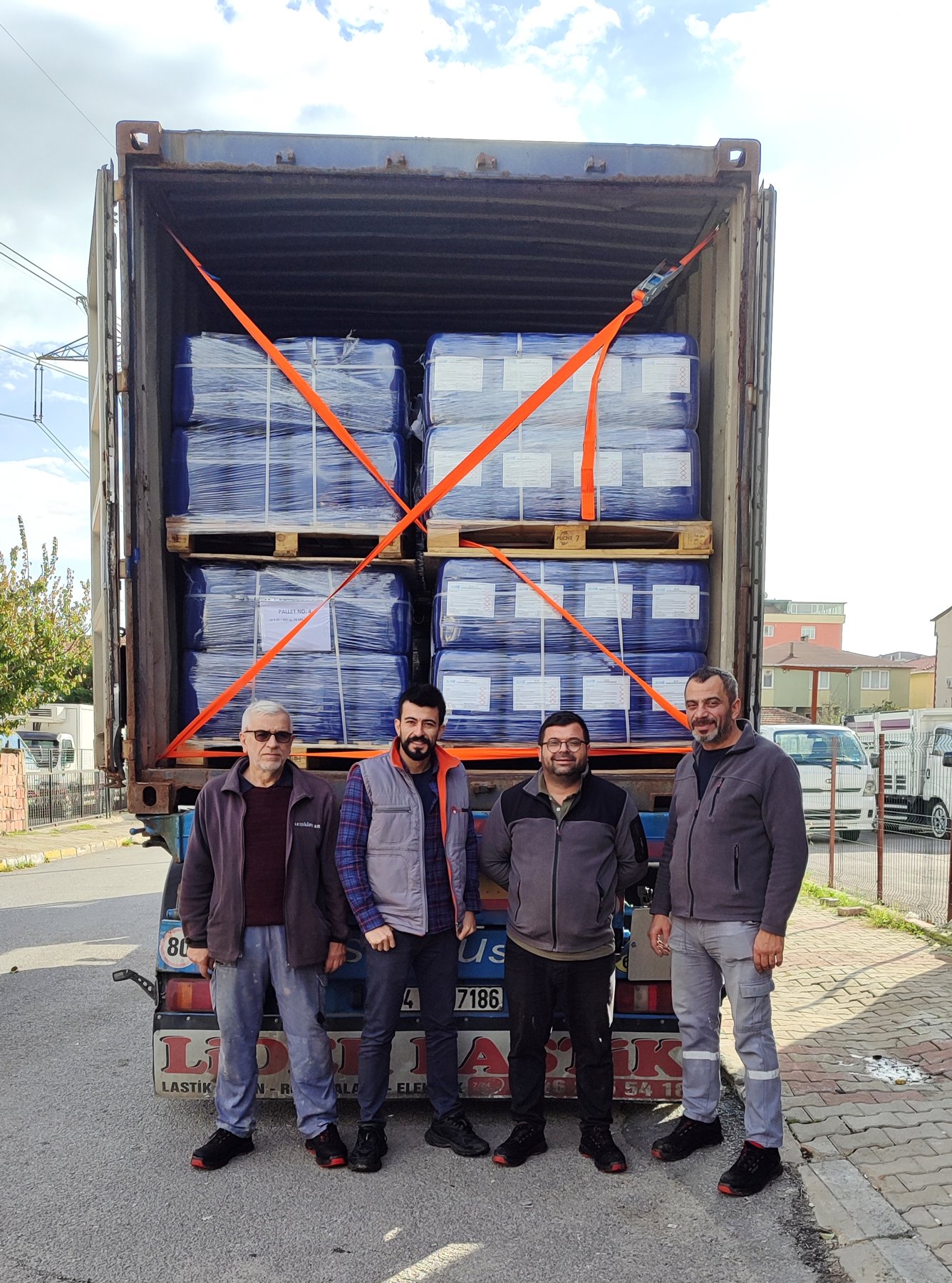
Cemkimsan makes the chemical in its own plant and ships it. For your food plant, we select the product with you from the water analysis.
Cefopol 1040, Cefolin 1087, Cemolin 1080, Ck 229, C scalant 1085 and C scalant 2005. NSF approval is on these six products.
The NSF boiler products are Cefopol 1040 and Cefolin 1087. Cefopol 1040 prevents scale and corrosion together. Cefolin 1087 stabilizes hardness and prevents scaling. The exact product depends on the feed water analysis.
Ck 229. It contains stabilized phosphate for copper. Scale, algae and the other chemicals for the tower are on the cooling-tower page. The other products in that list are not in this NSF group.
C scalant 1085 has the standard concentration for drinking and domestic water. C scalant 2005 is more concentrated and also protects at high hardness. Both are NSF approved. The dosage is set from the projection report.
Send your feed water analysis and say whether the steam can touch the food. Our technical team will reply with the NSF product.
We reply to quote requests within 12 hours.