17.06.2025
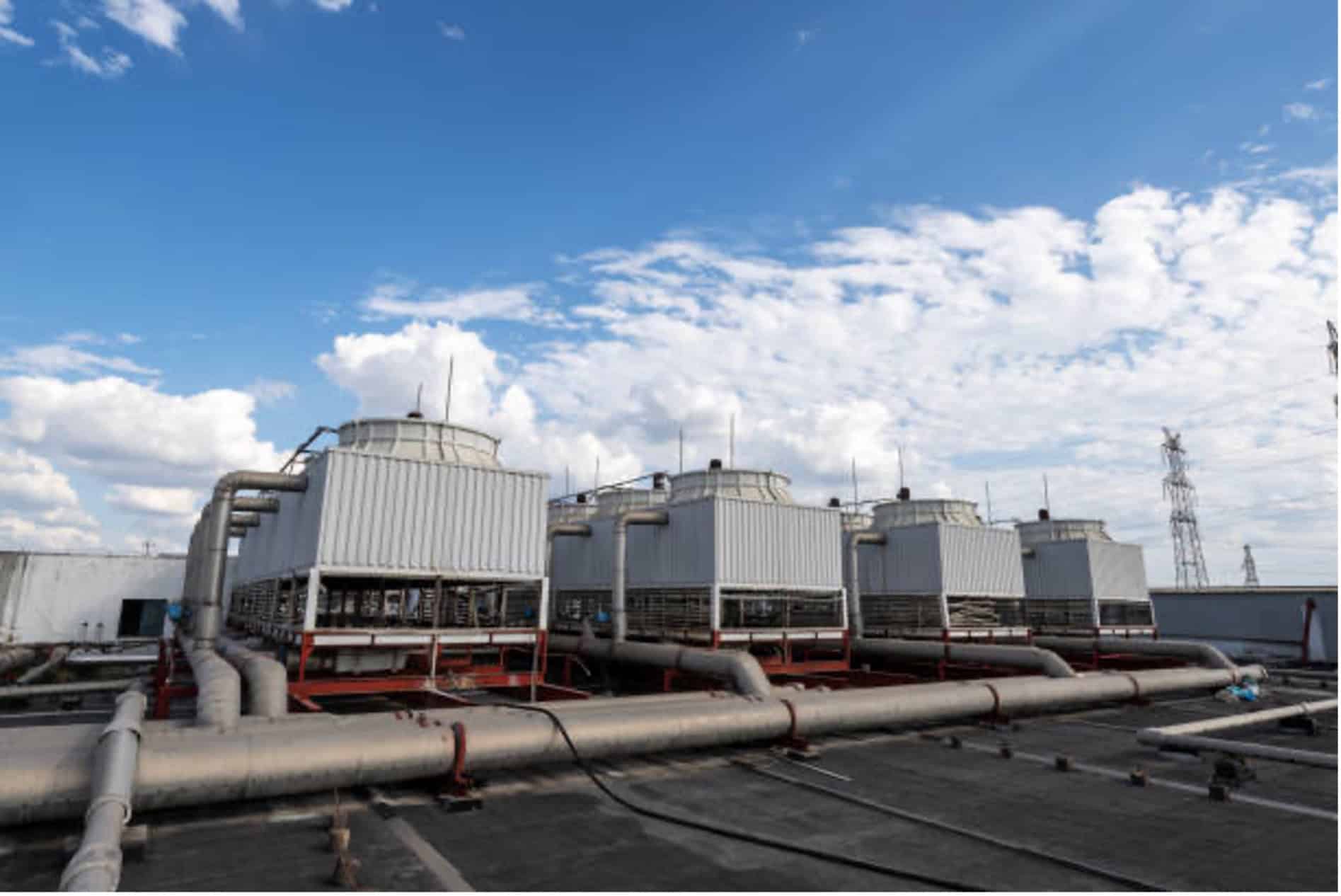
Prevention of Biological Fouling in Cooling Towers:
In industrial plants, cooling towers are critical for continuity and efficiency of the process. One of the most important problems in these systems is…
 Request a quote
Company
About usDealershipCertificatesReferencesBlogSearch the siteContact
+90 (216) 573 4014[email protected]Corrosion:
Corrosion is a natural event. Structures that form from all reactions that occur naturally are more stable. The stability of the structure depends on a fall in energy. The metal or alloy has lost its properties. Its entropy has risen.
Corrosion is the event in which metals or alloys lose their properties and pass to a more stable state in nature. In short, the material breaks down under the effect of the environment and becomes unusable.
This is one of the events that damages metal materials most over time. Because of corrosion, bridges and buildings can collapse, and pipelines can be damaged. When you design anything that uses metals, corrosion is an important item to consider. Structural safety and the life of the structure depend on it directly.
It is difficult to see the effect of corrosion in short periods of time. As the time scale increases, the damage from corrosion can be seen much more clearly.
How easily metals corrode differs from element to element. In general, the more active a metal is, the more easily it wears. As long as the metal surface does not passivate, we can determine corrosion activity from the standard electrode potentials.
Galvanic Corrosion (Electrochemical Corrosion):
In galvanic corrosion, different parts of a metal act as the anode and the cathode. One part of the same substance shows anode behavior, and the other part shows cathode behavior. A redox reaction occurs between these two parts. The structure of the parts that act as the anode and are oxidized, or that act as the cathode and are reduced, is then damaged.
For galvanic corrosion to occur, the following conditions must exist:
· Metals with different electrochemical potentials are present in a given system.
· There is an electrical connection between the two metals.
· There is an electrolyte that connects the two metals.
Galvanic couples usually appear as a design or manufacturing requirement. When galvanic corrosion occurs, the material that is the anode is attacked. The material that is the cathode is protected against corrosion.
When two metals with different potentials touch each other in an electrolyte solution, electrons flow from the anode toward the cathode. The corrosive attack on the anode is quite fast.
Corrosion mechanism:
When we examine the corrosion mechanism:
In stage 1, iron that is in contact with water starts to break down. It passes into the water and leaves electrons behind.
In stage 2, the electrons transfer inside the metal to the cathode region.
In stage 3, the electrons that collect in the cathode region react with oxygen in the water and form OH (hydroxyl) ions.
In stage 4, minerals dissolved in the water increase the electrolyte property of the water. They complete the corrosion cycle and let the released iron ions combine with OH. The corrosion mechanism is then complete.


The figure above shows the order of the electrical potentials of metals.
Metals that are more noble have a lower risk of corrosion.
As metals become more active, the risk of corrosion increases.
The clearest way to prevent galvanic corrosion is to select compatible materials at the design stage. If materials that must be used can cause galvanic corrosion of each other, take protective measures.
These measures are:
· Electrical insulation of the parts.
· Place the joints in an area that will not be exposed to moisture.
· Coat a cathode, or coat the cathode together with an anode (on large surface areas, or near a joint).
· Stop the electron flow by a chemical method.
Some corrosion-prevention products that Cemkimsan Kimya developed and that we produce in our factory:
CEFOPOL 4080; Corrosion inhibitor used in steam boilers.
CK-229; Scale and corrosion inhibitor for open and semi-open cooling towers.
CK-13; Corrosion inhibitor for closed-loop heating and cooling systems.
CK-42; Corrosion inhibitor for closed-loop heating and cooling systems.
Source;
Cemkimsan Kimya lecture notes;
https://dergipark.org.tr/tr/download/article-file/303375
17.06.2025
In industrial plants, cooling towers are critical for continuity and efficiency of the process. One of the most important problems in these systems is…
15.05.2025
Water has a vital importance in industrial processes. Water is used in steam boilers, cooling systems, drinking-water supply and the production line. That use…
12.02.2025
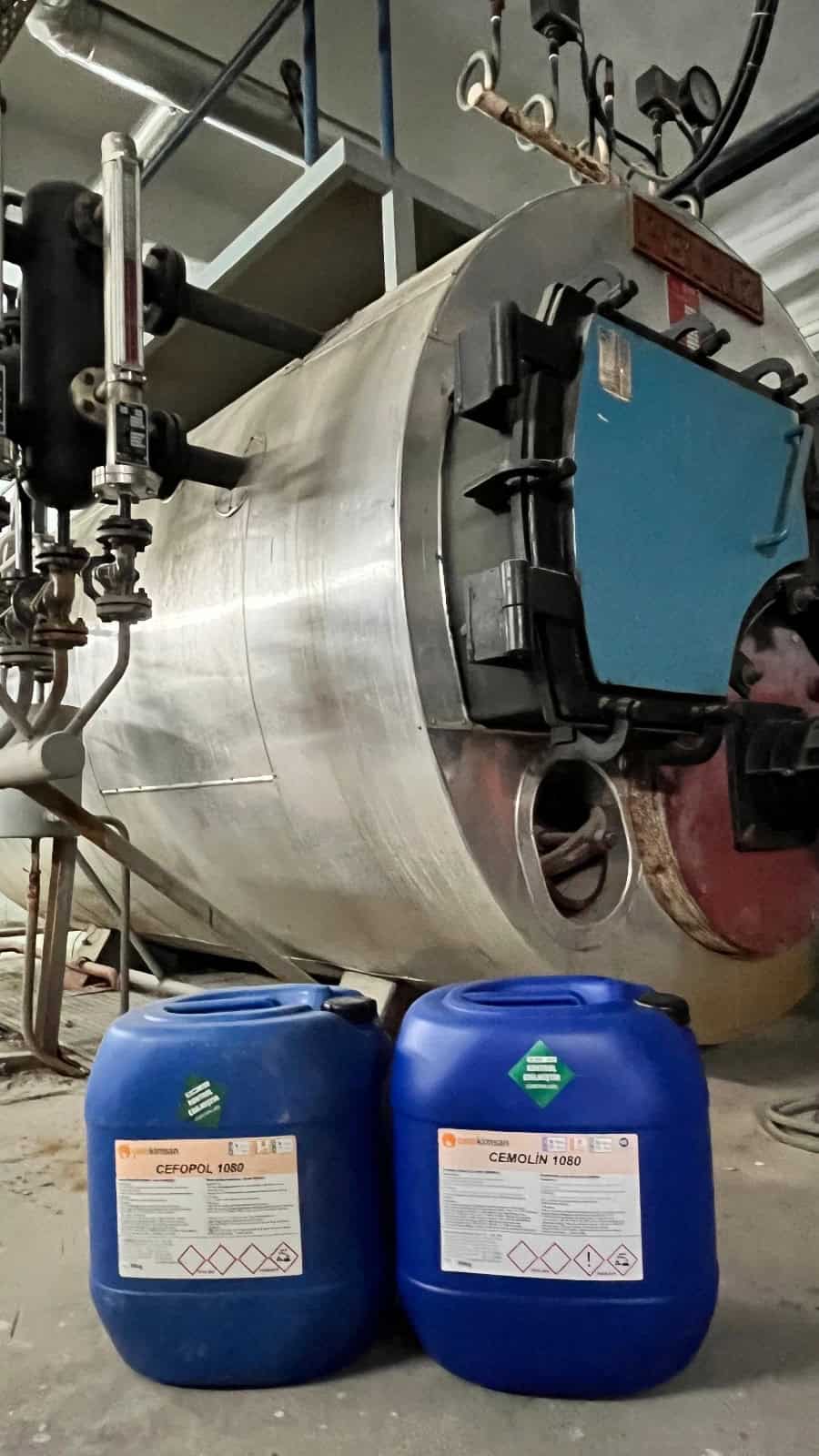
The main purpose of steam boilers is to heat water, obtain steam, and use this steam as an energy source. These boilers are usually chosen in industrial…
We help you select the correct chemical for your system
Send us your feed water analysis or your requirement. Our technical team will send you a recommendation. +90 (216) 573 4014 · [email protected]