17.06.2025
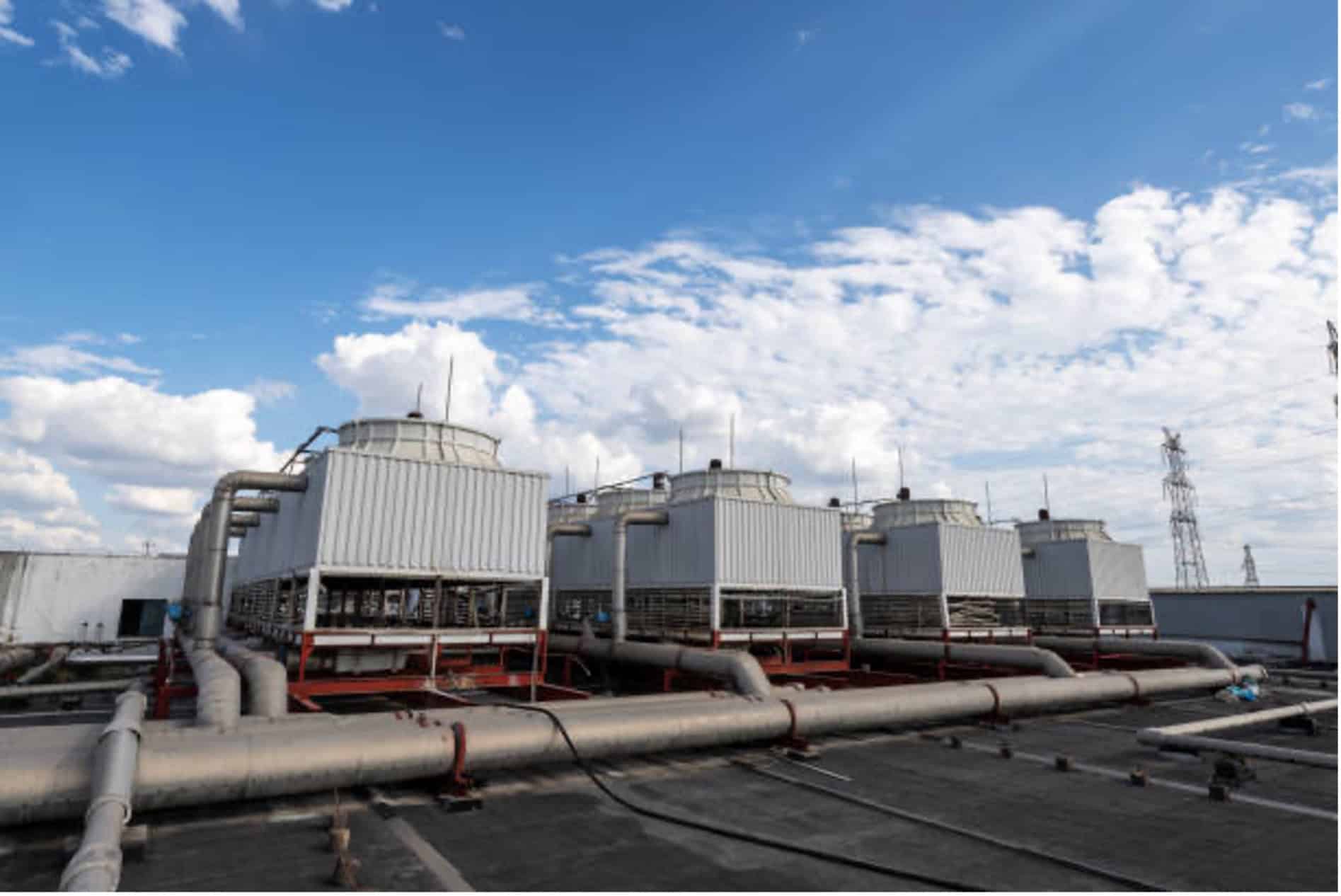
Prevention of Biological Fouling in Cooling Towers:
In industrial plants, cooling towers are critical for continuity and efficiency of the process. One of the most important problems in these systems is…
 Request a quote
Company
About usDealershipCertificatesReferencesBlogSearch the siteContact
+90 (216) 573 4014[email protected]Why is blowdown done in a steam boiler?
Steam boilers are systems that obtain steam by heating water.
Water, by its structure, is a solvent substance. It almost always contains impurities and compounds that cannot evaporate.
Boiler feed waters can be fed with the best treatment programs. Impurities such as suspended solids and dissolved substances are still present in a certain amount. Evaporating water molecules leave behind impurities that cannot be carried with the steam. As the steam boiler produces steam, the concentration of compounds that cannot be carried by evaporation increases inside the boiler over time. Impurities that reach a certain concentration cause negative effects in the boiler. For this reason the concentration ratio inside the boiler must be kept below a certain level. To reduce the concentration level, the water inside the boiler is discharged and water of low concentration is taken in. The operation of discharging the water is called blowdown. Water is blown out of the boiler with some force by the steam pressure inside the boiler.
The blowdown operation is an obligatory and indispensable item.
We can explain the meaning of boiler blowdown better with a comparison, and we can make it stay in the mind.
The human body, to continue life, must do the vital events called metabolism. Those events are feeding, digestion and excretion. Blowdown of dirty working water in the steam boiler is very similar to excretion in the human body.
Excretion is an obligatory event for the human body. Blowdown of the dirty working water in steam boilers is likewise very similar to that excretion event.
Excretion is as obligatory a vital event for the human body as blowdown is obligatory for steam boilers.
Blowdown must not be thought of as throwing a certain amount of energy away.
Insufficient blowdown in steam boilers has negatives. Those are energy loss, water loss, chemical loss, and a rise in environmental pollution.
With insufficient blowdown, again, a risk of deposit formation in the boiler appears. A corrosion risk appears because conductivity increases and corrosion ions are many. The quality of the steam that is produced is spoiled. A risk of a fall in product quality appears.
Steam-boiler blowdown limits given by Abma
(For boilers that are low-pressure and fed with soft water)
Boiler pressure Silica Total alkalinity Specific conductivity
(Atü) (ppm SiO2) (ppm CaCO3) (µS/cm)
0-21 150 700 7000
21-32 90 600 6000
32-42 40 500 5000
What are the blowdown types in the boiler?
1- Surface blowdown operation:
Unwanted substances may be in the liquid phase. They have not settled to the boiler bottom and they are dissolved in the water. Surface blowdown then discharges them from the system automatically. Surface blowdown separates particles such as dirt and oil on the boiler water surface.
2- Bottom blowdown operation:
Impurities and particles that do not dissolve in water are on the bottom surface of the boiler. These impurities cause sludging as the concentration increases. With bottom blowdown, these undissolved impurities and the sludge are discharged.
This bottom-blowdown valve is used to remove the sludge that forms in the boiler. These valves must be selected as special spring valves or, if not, as ball valves. To remove the sludge from the boiler, the sludge can be moved by opening suddenly while the boiler is under pressure. The bottom-blowdown valve must be opened and closed at least 3-5 times a day, for a few seconds. For safety, an isolation valve must be kept in front of both the spring valves and the ball valves.
In short, surface blowdown is discharge from the surface of the dirt that has collected on the boiler surface. Bottom blowdown is discharge from the bottom of the sludge structure that has collected at the bottom.
Recovery of energy:
The water discharged by blowdown has the same pressure and temperature values as the boiler water. Before this high-energy waste is discharged, recovery of the energy is possible by using a storage tank, a heat exchanger, or both. A heat-recovery application is useful for every boiler that has surface-blowdown waste above 5 percent of the steam capacity.
What are the benefits of controlled and correct blowdown?
Purer and cleaner steam is obtained.
Deposit formation at the boiler bottom, and the corrosion and heat loss that the deposit would cause, are prevented.
Foaming of the boiler water and carryover to the steam line are prevented.
The quantity of dissolved solids and suspended matter in the boiler water is kept under control.
Sludge can block the region of the level gauge in particular. The gauge can go out of service. The boiler can be left without water. Correct blowdown prevents that chance.
As a result
Blowdown is an obligatory and indispensable item to reduce corrosion and scaling in steam boilers to a minimum.
Feed water whose quality has been raised by water purification and chemical treatment in steam boilers lowers the blowdown quantity by an important amount.
For this reason, with water treatment and with pretreatment, boiler feed water is passed through various purification operations and is given to the boiler.
However much the water given to the boiler has passed through pretreatment, both corrosive items and scale items are still carried into the boiler. Chemical treatment is required to prevent these items.

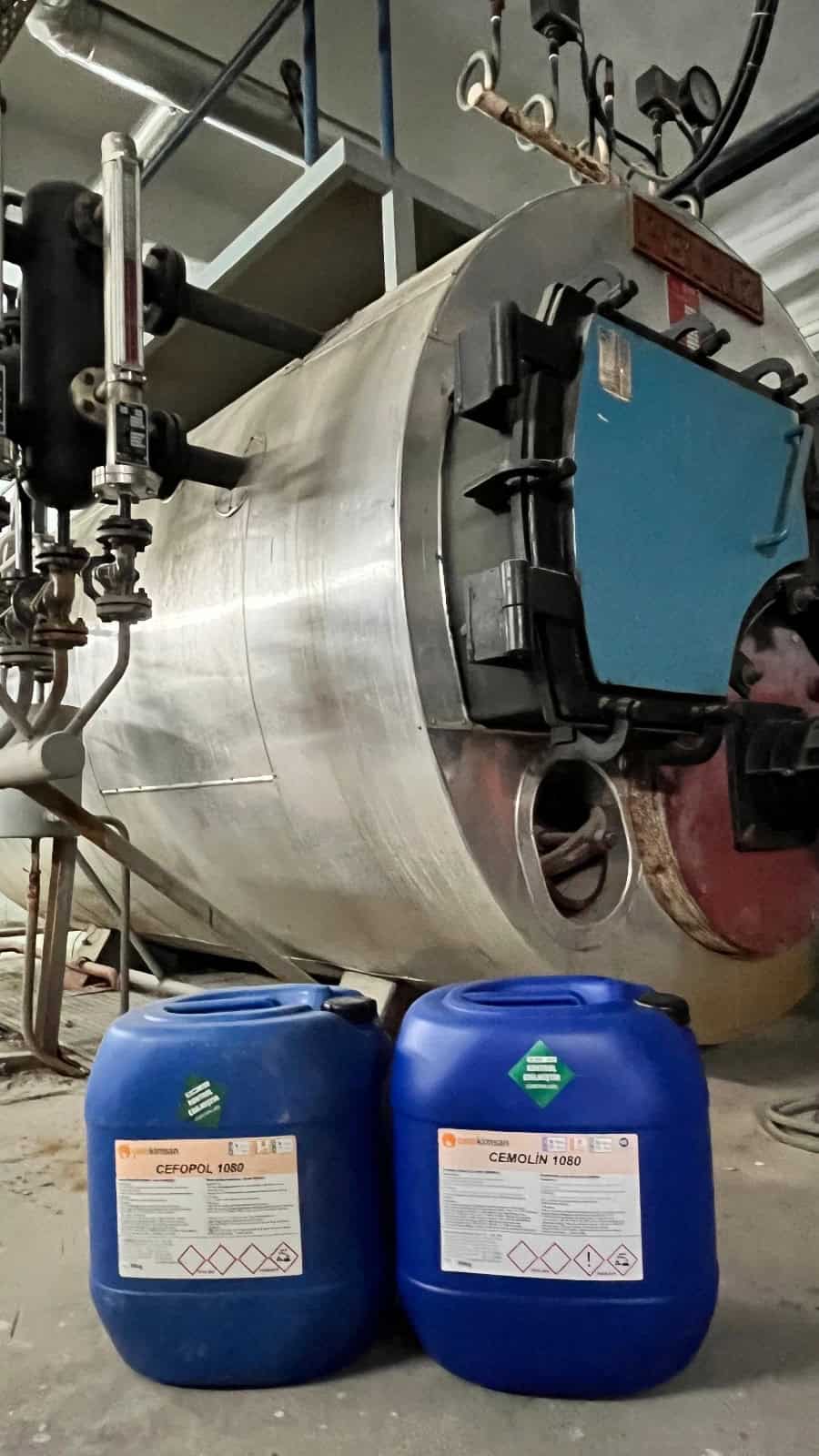
As Cemkimsan Kimya, our steam-boiler protection products that we developed and produce in our factory:
Cefopol 1080 (Multifunction boiler water treatment chemical)
Cefopol 6030 (Hardness stabilizer and scale preventer for steam boilers)
Cefolin 1080 (Multifunction boiler and steam-line treatment chemical)
Cemolin 1080 (NSF-approved steam-line corrosion inhibitor suitable for use in food production)
Source;
Cemkimsan Kimya lecture notes
TMMOB Chamber of Chemical Engineers Water Handbook
https://stringfixer.com/tr/Boiler_blowdown
https://www.denizcilikbilgileri.net/kazanlarda-blof/amp/
https://www.suvecevre.com/yayin/553/buhar-kazani-blof-uygulamasi_16368.html#.YiKHC-hBzIV
17.06.2025
In industrial plants, cooling towers are critical for continuity and efficiency of the process. One of the most important problems in these systems is…
15.05.2025
Water has a vital importance in industrial processes. Water is used in steam boilers, cooling systems, drinking-water supply and the production line. That use…
12.02.2025
The main purpose of steam boilers is to heat water, obtain steam, and use this steam as an energy source. These boilers are usually chosen in industrial…
We help you select the correct chemical for your system
Send us your feed water analysis or your requirement. Our technical team will send you a recommendation. +90 (216) 573 4014 · [email protected]