17.06.2025
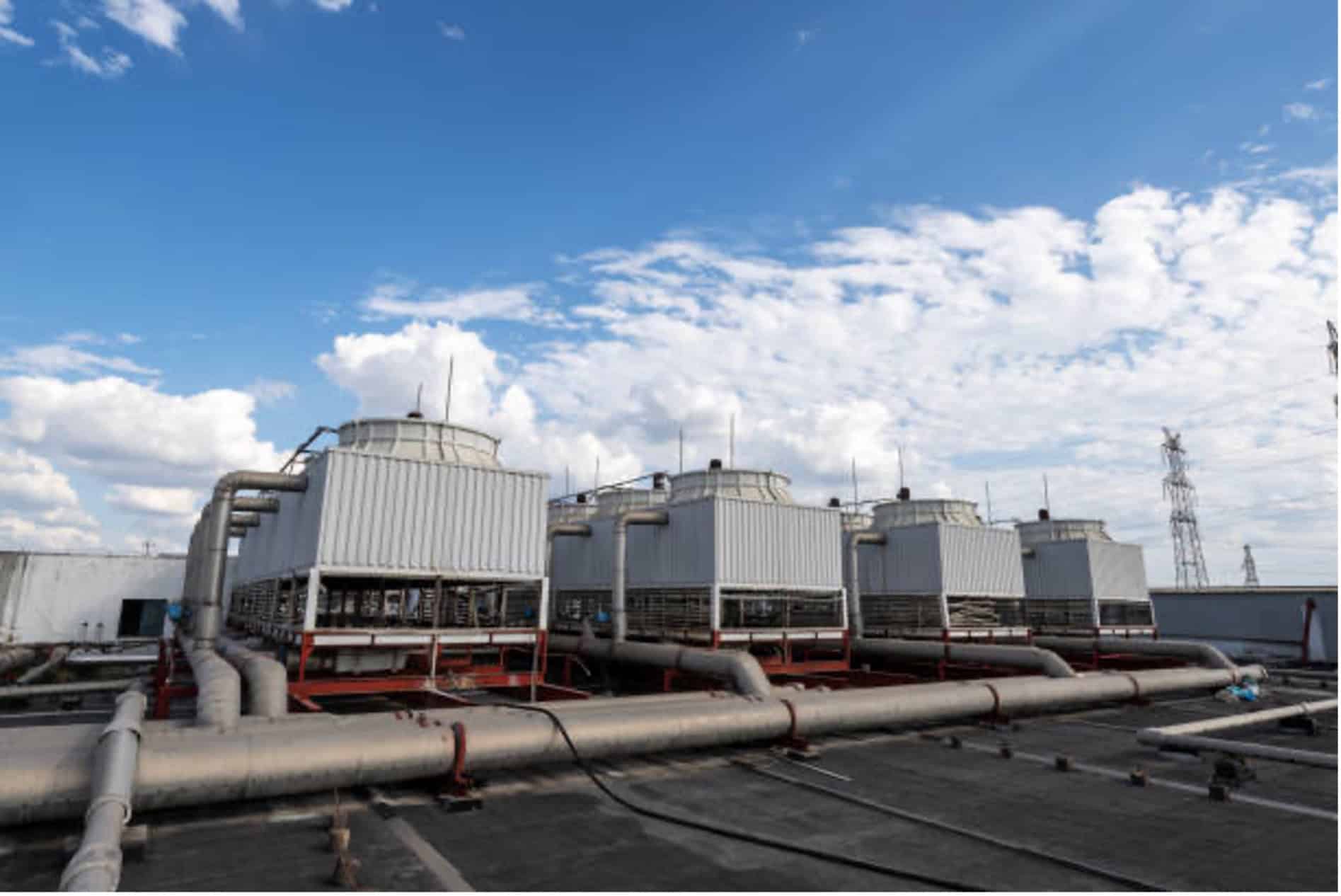
Prevention of Biological Fouling in Cooling Towers:
In industrial plants, cooling towers are critical for continuity and efficiency of the process. One of the most important problems in these systems is…
 Request a quote
Company
About usDealershipCertificatesReferencesBlogSearch the siteContact
+90 (216) 573 4014[email protected]The basic purpose of steam boilers is to heat water, produce steam, and use this steam as energy. Steam boilers are usually used in industrial plants, in electricity generation, in heating systems, and in processes.
You can examine corrosion in steam boilers under two headings.
CORROSION IN IDLE BOILERS
Boilers that are taken out of service for maintenance, repair, or standby meet corrosion types caused by oxygen. Oxygen reacts with iron and forms iron oxides and hydroxides. In water that contains oxygen, iron corrodes by formation of an oxygen concentration cell. Fe2+ forms in the anodic regions, and OH– ions form in the cathodic regions.
Oxygen corrosion can be observed in acidic, neutral, or basic environments. In the pH range 5 – 8, pH has no effect on the corrosion rate. Avoid a low pH, because it causes acidic corrosion. If the pH is higher than 8 and the water is moving, the corrosion rate increases. In the pH range 11 – 13, the corrosion rate falls to its lowest level.
The softener must supply water of suitable hardness, so that scale formation is prevented.
As a result, to prevent corrosion that can form in boilers during shutdown, you must remove oxygen and water from the environment. Whatever the reason a boiler was opened, close it as soon as possible. Do not allow atmospheric corrosion.
Some boilers are kept on standby under pressure and are ready to start at once. Apply the same chemical treatment program that you apply to operating boilers.
CORROSION IN OPERATING BOILERS AND ITS CONTROL
We can classify the main causes of corrosion in steam boilers as physical factors and chemical factors. Physical factors are the boiler construction, weld quality, material selection, mechanical stresses, heat-transfer rate, pressure, temperature, operation, and maintenance. Chemical factors are pH, dissolved oxygen and carbon dioxide, chloride, sodium hydroxide, hydrogen, iron oxides, and deposits.

Some water treatment products that Cemkimsan Kimya developed and that our factories produce:
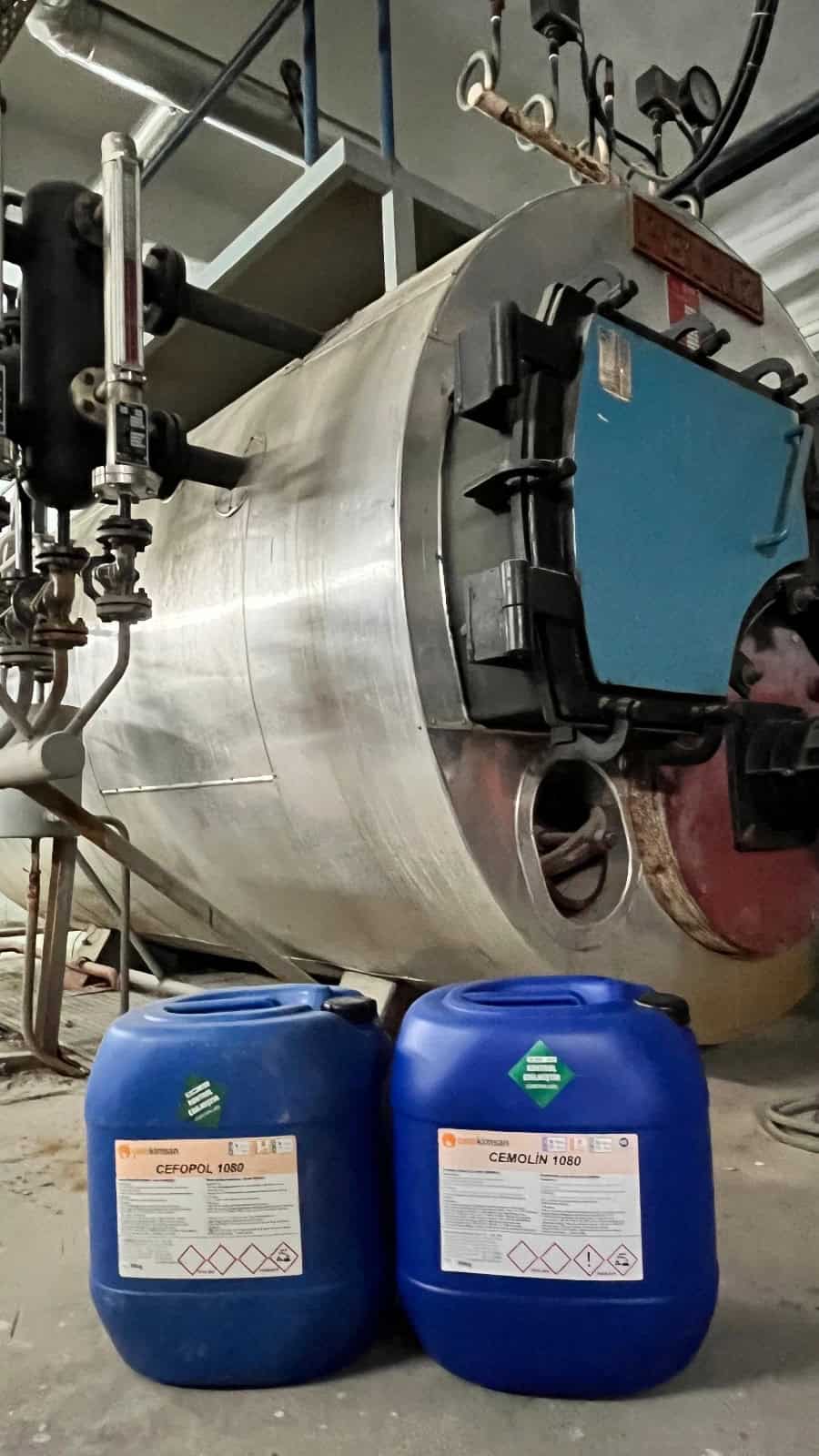
Cefopol 1080: Multifunctional boiler water treatment chemical.
Cemolin 1080: NSF-approved steam boiler treatment chemical suitable for use in food production.
Cefopol 1040: Multifunctional scale and corrosion inhibitor for steam boilers
Cefolin 1080 : Multifunctional treatment chemical for the boiler and the steam line
Cefopol 4080: Corrosion-inhibitor treatment chemical used in steam boilers.
Cefopol 6018: Boiler water treatment chemical with dispersant properties.
Hakan ÇOBAN
Chemical engineer
Water treatment consultant
Source:
http://dspace.yildiz.edu.tr/xmlui/bitstream/handle/1/10398/0042247.pdf?sequence=1&isAllowed=y
https://www.tesisatguncesi.com/2021/01/buhar-kazanlar.html(görsel)
Chamber of Chemical Engineers of TMMOB, Water Handbook
Cemkimsan Kimya lecture notes
17.06.2025
In industrial plants, cooling towers are critical for continuity and efficiency of the process. One of the most important problems in these systems is…

15.05.2025
Water has a vital importance in industrial processes. Water is used in steam boilers, cooling systems, drinking-water supply and the production line. That use…
12.02.2025
The main purpose of steam boilers is to heat water, obtain steam, and use this steam as an energy source. These boilers are usually chosen in industrial…
We help you select the correct chemical for your system
Send us your feed water analysis or your requirement. Our technical team will send you a recommendation. +90 (216) 573 4014 · [email protected]