Önleme mi, Temizlik mi?
Antiskalant ve membran temizleyiciler, RO sistemlerinin sağlığı için birbirini tamamlayan ama farklı işlevlere sahip iki ürün grubudur. Antiskalant önleyici bir çözümdür — kireçlenmenin oluşmasını baştan engeller. Membran temizleyiciler ise iyileştirici bir çözümdür — zamanla oluşmuş kirlenmeyi giderir.
Antiskalant Ne Zaman Yeterli Olmaz?
En iyi antiskalant dozajı ile çalışan sistemlerde bile, organik kirlenme, biyofilm oluşumu veya beklenmedik su kalitesi değişimleri nedeniyle zamanla membran yüzeyinde birikim oluşabilir. Bu noktada düzenli membran temizliği devreye girer.
Membran Temizleyici Türleri
Cemkimsan olarak sunduğumuz C-mec ürün ailesi, farklı kirlenme türlerine yönelik çözümler sunar:
Dezenfektanlar (C mec 17): periyodik mikrobiyolojik kontrol için
Bazik temizleyiciler (C mec 200): organik kirlenme ve biyofilm için
Asidik temizleyiciler (C mec 102, C mec 100): mineral birikintiler için, metal hassasiyetine göre farklı asit tipleri
Askıda katı maddelerin sebep olduğu fiziksel kirlenme ve tıkanmalar;
Contamination and clogging caused by physical impurities—such as sand, clay, silt, colloidal silica, and other contaminants in the reverse osmosis feedwater—are among the primary causes of reverse osmosis membrane fouling.
To solve this problem, the physical impurities in the raw water must be identified, and appropriate high-quality physical filtration systems must be used based on the results of the analysis and testing.
Attention should also be paid to a very common operational error resulting from clogging: as clogging begins in the membrane, a pressure difference develops between the membrane inlet and outlet, and efficiency decreases. Attempting to restore efficiency to pre-clogging levels by increasing the feedwater pressure results in a high pressure difference, causing the membrane to deform; even if it is backwashed, it becomes unusable.
Washing must be performed before clogging occurs. The membranes can be cleaned of solids by washing them with high-flow water containing chemicals.
Membrane cleaning should be performed when there is a 10–15% decrease in production water flow rate, a 20–25% increase in production water conductivity, or a 30–40% increase in pressure drops across the reverse osmosis stages. In addition, the membranes should be cleaned at approximately 3-month intervals.
The products we use to clean the membranes we develop and manufacture at our factories our products;
C-MEC 102: Acidic membrane cleaner; used to clean membranes whose pure water production capacity has decreased due to scale and similar contaminants. It is an acidic product with a low pH value.
C-MEC 100: This organic acidic membrane cleaner is used to clean membranes whose pure water production capacity has decreased due to scale and similar contaminants. It is an acidic product with a low pH value.
C-MEC 200: Alkaline membrane cleaner; used to clean membranes whose pure water production capacity has decreased due to colloidal and similar contaminants. It is an alkaline product with a high pH value.
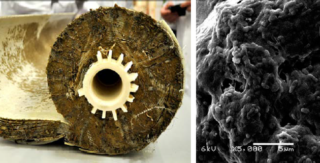
Physical contamination and blockages caused by microbiological contaminants; (C-MEC 17)
Contamination and blockages caused by microbiological contaminants (bacteria, viruses, algae, fungi, etc.) in the reverse osmosis feedwater are among the secondary causes of reverse osmosis membrane fouling. This type of contamination originates from both the feedwater itself and the conditions under which it is stored; as it increases, it leads to fouling and blockages by forming biofilms on the reverse osmosis membranes.
To solve this problem, the total microbiological contamination load (total bacteria) and the diversity of microbiological contamination in the feedwater must first be determined; a solution can then be achieved through the use of appropriate disinfection systems (chlorination, ozonation, use of biocides, ultraviolet treatment, UF filters, etc.).
Despite these measures, microbiological contamination can still occur, and at some point, biological contamination may develop in the product; the membranes may even become clogged.
As Cemkimsan Kimya, we have developed and manufacture in our factories a product used for cleaning membranes to remove microbiological contaminants is;
C-MEC 17: Membrane Disinfectant is a membrane cleaning chemical used to remove biological deposits that accumulate on R.O. membranes over time.
Chemical and physical contamination and blockages caused by dissolved solids (C-SCALANT)
Among the most significant causes of fouling in reverse osmosis membranes are chemical fouling and blockages resulting from dissolved solids (calcium, magnesium, carbonate, silicate, sulfate, etc.) in the reverse osmosis feedwater. In membrane systems, the water passing through the membrane emerges at a high purity level, while a high concentration of impurities remains on the membrane. When these impurities reach a certain concentration, they form crystalline structures that create scale, impairing the membrane’s water permeability and ultimately causing the system to become clogged.
To prevent the formation of these types of scale, scale-inhibiting products known as "antiscalants" are used.
When the selected antiscalant is applied correctly, it significantly delays crystallization, thereby causing blockages to occur much later. The need for sulfuric acid and hydrochloric acid decreases, and the risks associated with the use of these chemicals are reduced. Operating costs, as well as cleaning and maintenance costs, are reduced. It enables a higher recovery rate in reverse osmosis systems, allows the system to operate for longer periods, reduces the concentrate flow rate, and extends membrane life.
At Cemkimsan Kimya, we have developed and manufacture at our plant our antiscalant products;
C-SCALANT 6080: A protective product for membranes fed with water containing high levels of silica. It prevents membrane fouling and extends their useful service life.
C-SCALANT 2005: A membrane protection product. It prevents membrane clogging or a decrease in capacity and extends their useful service life.
C-SCALANT 1085: A membrane protection product. It prevents membrane clogging or capacity loss and extends the useful service life of the membranes. Suitable for use in drinking water production facilities. NSF-certified.
İkisini Birlikte Kullanmak
Doğru antiskalant dozajı ile düzenli membran temizliğinin birlikte uygulanması, RO sisteminizin uzun vadede en verimli şekilde çalışmasını sağlar. Antiskalantın temel işlevi hakkında daha fazla bilgi için Antiskalant Nedir? yazımıza göz atabilirsiniz.
Sisteminize uygun temizlik programı, kirlenme analizinize dayalı olarak Cemkimsan su şartlandırma danışmanları tarafından belirlenir.
Source:
https://www.ttmd.org.tr/yayinlar/ttmd-dergisi#gallery-234
http://www.suvecevre.com/edergi/19/149/38/index.html#zoom=z
https://www.cemkimsan.com.tr/post/antiskalant-nedir
https://www.cemkimsan.com.tr/post/antiskalant-ve-membran-teknolojisi
TMMO Chemical Engineers' Association; Water Handbook
Cemkimsan Chemistry Lecture Notes