Stone Acid is used to remove scale and corrosion deposits from metal surfaces using either immersion or circulation methods.
Scale deposits form on surfaces where heat transfer occurs.
These surfaces (boilers, condensers, heat exchangers, etc.) are generally in contact with water, and the Mg and Ca ions present in the water precipitate over time, forming a layer of scale and causing scaling. The most suitable scale remover for this type of scale is CAS 117. CAS 117 contains a corrosion inhibitor, which minimizes corrosion on metal surfaces.
The type and amount of stone acid to be used prior to chemical cleaning must be determined. To do this, the amount of lime buildup on the surface must first be calculated. When calculating the amount of stone acid, it is estimated that 3 kg of stone acid is required to remove 1 kg of lime.
Stone acid should be diluted before being applied to systems.
Methods for Applying Stone Acid
1-Immersion Method:
The immersion method is generally used for cleaning small parts. In this method, the parts to be cleaned are immersed in a CAS 117 (Stone Acid) solution diluted up to 10%, depending on the degree of contamination. Stirring the solution regularly ensures more effective cleaning.
2. Circulation Method:
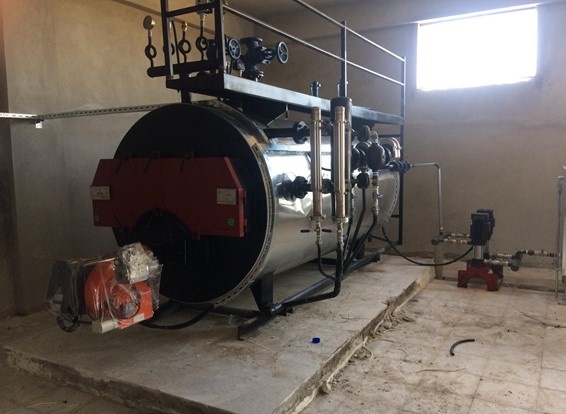
The circulation method is generally used to remove scale and corrosion deposits from large systems such as steam boilers, heating boilers, condensers, evaporators, and heat exchangers.
Calcium and magnesium scale deposits are commonly found, and CAS 117 stone acid is used to remove this scale. It is recommended that systems undergo mechanical cleaning prior to chemical cleaning. This will improve the effectiveness of the chemical cleaning process.
The boiler to be cleaned is filled to the operating level with a CAS 117 solution prepared at a predetermined concentration. The solution is drawn from the boiler blowdown using an acid-resistant pump and fed back into the boiler through the top manhole to initiate circulation. During this process, the pH value of the CAS 117 (Tartaric Acid) solution is monitored; as the pH value drops, CAS 117 is added to maintain a constant pH. Once the pH level stabilizes, the solution is circulated for 6–14 hours.
Neutralization:
After chemical cleaning, a neutralizing chemical must be added to the boiler to neutralize the water, and the water must be drained. Following chemical cleaning, the boiler must be mechanically cleaned again. Afterward, the boiler must be rinsed thoroughly with plenty of water. If the neutralization process is not performed in the boiler, rust will reappear shortly thereafter.
Stone acid waste generated through various processes must be neutralized before being sent to a storage area. Otherwise, the acidic waste will convert the heavy metals and certain organic substances present in the waste into soluble forms, leading to increased concentrations of heavy metals and organic substances in leachate.
The our tartaric acid products;
CAS 16 – Lime Remover for Precious Metals
CAS 16 tüm ısıtma ve soğutma sistemlerinde oluşan kireç tabakası ve mineral tortuların temizliğinde kullanılan organik asidik toz üründür. Metal koruyucu inhibitör içerir. Çinko, alüminyum, paslanmaz çelik, galvaniz gibi hassas metallere zararı minimuma indirilmiştir.
CAS 117 tüm ısıtma ve soğutma sistemlerinde oluşan kireç tabakası ve mineral tortuların temizliğinde kullanılan asit bazlı üründür. Yoğun ve inatçı kireç tabakalarının temizliğinde kullanılır. Metal koruyucu inhibitörler içerir.
CAS 167 – Copper-Specific Stone Acid
CAS 167 is an acid-based product used to remove limescale and mineral deposits from all heating and cooling systems. It contains a metal-protecting inhibitor. Damage to sensitive metals such as zinc, aluminum, stainless steel, and galvanized steel is minimized.
CAS 179 – Silica-Based Lime and Scale Remover
CAS 179 is an acid-based product used to remove silica-based scale and mineral deposits from all heating and cooling systems. It is used to clean heavy and stubborn silica deposits. It contains metal-protecting inhibitors.
CALK 111 – Neutralizing Chemical
CALK 111 is a product used for neutralization in heating and cooling systems that have undergone acid cleaning. It stabilizes the corrosive environment caused by low pH by raising the pH level of the water in the systems.
Source:
TMMOB Chamber of Chemical Engineers; Water Handbook
Cemkimsan Chemistry Lecture Notes
http://www.cevresehirkutuphanesi.com/assets/files/slider_pdf/mtmBS6TFH008.pdf