
Su soğutma kulesi; tesisten ısınarak gelen sıcak suyun bir kısmını buharlaştırıp atmosfere atarak soğutan, gerekli sıcaklığa ulaşmış kalan kısmını ise tesise kullanmak üzere geri gönderen bir ısı değiştirici sistemdir.
Güç santralleri, büyük iklimlendirme sistemleri ve kimya endüstrisi büyük miktarlarda atık ısı üretirler ve bu ısı genellikle yakınlardaki bir göle veya akarsuya verilir. Fakat bazen su akışı sınırlıdır veya ısıl kirlenme önemli bir kıstas olarak göz önüne alınmak zorundadır. Bu gibi durumlarda, atık ısı atmosfere verilir ve soğutma suyu ısı kaynağıyla atmosfer arasında ısı geçişi için aracı akışkan olur.
Çeşitli işlemlerden geçmiş bu suyu mevcut kaynakları tüketmeden tekrar kullanabilmek, sudan istenmeyen ısıyı uzaklaştırmak, bunu zararsız ve ucuz olarak çevreye atabilmek ancak kurulacak bir soğutma kulesi ile mümkündür.
Bir soğutma kulesinde çevre havası ile temas haline gelen suyun bir kısmı buharlaşır ve su sıcaklığının düşmesine neden olur. Buharlaşan su, hava içine nem olarak girerek, havanın özgül neminin ve izafi neminin artmasına sebep olur. Soğutma kulesinde su teorik olarak en fazla giriş havasının yaş termometre sıcaklığına kadar soğutulabilir. Soğutma kulesi ne kadar etkili ise pratikte yaş termometre sıcaklığına o kadar yaklaşılabilir. Pratikte su sıcaklığı giriş havasının yaş termometre sıcaklığının 4°C veya 5°C üzerindeki sıcaklığa kadar soğutulabilir. Soğutma kulesinin su havuzuna, buharlaşan su miktarına eşit miktarda besleme suyu ilave edilmelidir. İlave edilen su miktarı (buharlaşan su miktarı) üzerinden enerji denkliği yapılır.
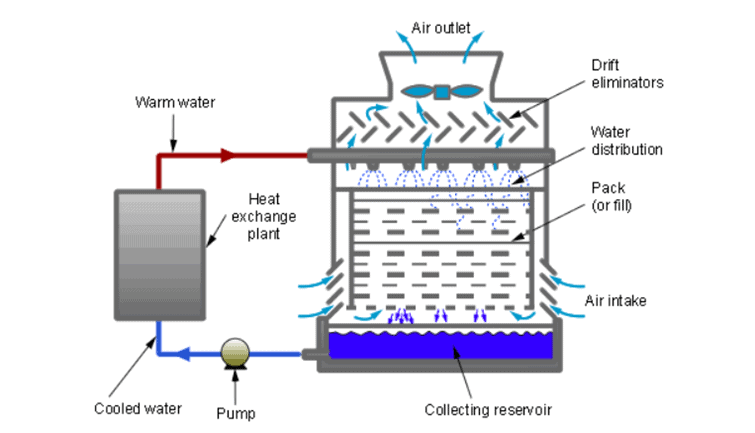
Soğutma Kulelerinde Temel İfadeler:
Kuru Termometre Sıcaklığı: Havanın içindeki nemin ve radyasyonun etkisi olmaksızın herhangi bir termo eleman, termometre, termokupl vb. bir sıcaklık ölçme aleti ile yapılan ölçmede elde edilen sıcaklığa denir.
Yaş Termometre Sıcaklığı: Kuru termometre haznesinin etrafını, ıslatılmış ince bir bez ile sarıp bir vantilatör önüne tutarsak, rüzgarın tesiri ile bezdeki nem, gizli ısıyı çekip buharlaşmaya başlar ve termometredeki sıcaklığın giderek düştüğünü görürüz. Düşme nihayete erdiğinde okuduğumuz sıcaklığa YAŞ TERMOMETRE SICAKLIĞI deriz. Yaş termometre sıcaklığı, bulunan ortamın kuru termometre sıcaklığına ve nem miktarına bağlı olarak değişir. Hava neme doymamış ise yaş termometre sıcaklığı kuru termometre sıcaklığından küçük çıkacaktır. Bunu elimize bir miktar kolonya döktüğümüzde buharlaşmadan dolayı elimizin serinlemesi gibi açıklayabiliriz.
Çiğ Noktası Sıcaklığı: Nemli hava sabit basınçta soğutulduğunda, içindeki su buharının yoğuşmaya başladığı andaki sıcaklığa çiğ noktası sıcaklığı denir.
İzafi Nem: Belli bir basınç ve sıcaklıkta ve belli bir hacimde olan havanın içinde bulunan su buharı miktarının, aynı sıcaklık ve basınç şartlarında ve aynı hacimdeki havanın içerebileceği azami su buharı miktarına oranı izafi nemdir; yüzde (%) olarak ifade edilir.
Özgül Nem (Nem Oranı): Göz önüne alınan nemli hava içindeki su buharı kütlesinin kuru hava kütlesine oranına mutlak veya özgül nem denir.
Soğutma: Soğutma sırasında havanın özgül nemi sabit kalır, fakat bağıl nemi artar. Eğer bağıl nem istenmeyen ölçüde artarsa, havadaki su buharı miktarını azaltmak, başka bir deyişle nem almak gerekebilir. Bunu gerçekleştirmek için, havanın çiğ noktası sıcaklığından daha düşük bir sıcaklığa soğutulması gerekir.
Yaklaşım: Soğutma kulesinden çıkan suyun sıcaklığı ile giriş havasının yaş termometre sıcaklığı arasındaki farka yaklaşım denir.
Duyulur Isı (SensibleHeat): Havanın kuru termometre sıcaklığını yükseltmek üzere (özgül nemi sabit kalmak şartıyla) dış ortama verilen ısı miktarıdır.
Gizli Isı (LatentHeat): Bir miktar suyun sıcaklığını ve basıncını değiştirmeden, suyu buhar haline getiren ısıya gizli ısı denir. Bu su buharı hava içine karışırsa, buhar haline gelen bu suyun gizli ısısıda havaya ilave edilmiş olur. Aynı şekilde havadaki buharın bir miktarı yoğunlaştırılırsa, havadan gizli ısı alınmış olur. Örneğin; kapalı bir oda düşünelim. Bu odanın sıcaklığının 25°C olduğunu kabul edelim. Bu odaya 25°C’deki su buharından bir miktar gönderdiğimizi farz edelim. Odanın duvarında da bir termometre asılı olsun. Bu termometrede herhangi bir sıcaklık yükselmesi olmayacaktır. Halbuki kapalı sistem halindeki bu odaya ısı enerjisi verdik. Bu enerji ne oldu? Odanın havasının entalpisi (ısı tutumu) yükseldi. Yani gizli ısısı yükseldi. Havaya gizli ısı ilavesinde havanın kuru termometre sıcaklığı sabit kalır. Fakat yaş termometre sıcaklığı yükselir. Entalpisi ve özgül nemi artar.
Cemkimsan Kimya bünyesinde geliştirdiğimiz ve fabrikalarımızda ürettiğimiz bazı su şartlandırma sürünlerimiz;
CK 229: Açık ve yarı açık devre soğutma kulelerinde kışır ve korozyon kontrolü amaçlı kullanılan fosfonat bazlı şartlandırma kimyasalıdır. Kireçlenmeye sebep olan minerallerin kristal yapısını bozarak amorf hale getirir, blöf ile dışarı atılmasını sağlar. Bakır yüzeylerde korozyon oluşumunu önler.
CK 429: Açık ve yarı açık devre soğutma kulelerinde kışır ve korozyon kontrolü amaçlı kullanılan tam organik şartlandırma kimyasalıdır. Yüksek ph değerlerinde asit kullanımına gerek olmadan etkili olmaktadır. Tam organik yapısı ile çevre dostudur. Bakır yüzeylerde korozyon oluşumunu engeller.
C BIOCIDE 886: Açık soğutma kulelerinde endüstriyel proses sularında mikroorganizma kontrolü için tasarlanmış biyosittir. Yosun, bakteri, mantarların oluşumunu engeller. Bu biyolojik oluşumun neden olduğu tıkanma, kirlilik ve korozyonun önüne geçer. Bakır içeren metal yüzeylerde güvenle kullanılabilir.
CK 699: Soğutma sistemlerinde pH – alkaliniteyi düzenlemek amaçlı kullanılan yardımcı üründür. Yüksek pH değerinin sebep olduğu birikinti problemini engeller.
CK 180: Açık soğutma kulelerinde kışır kontrolü amaçlı kullanılan tam organik dispersanttır. Su içindeki askıda katı maddelerin birleşip çökmelerini ve metal yüzeye yapışmasını engelleyerek soğutma kulelerinde birikinti oluşumunu engeller. Korozyon inhibitörlerinin metal yüzeylerine kolayca ulaşabilmeleri için temiz yüzeyler sağlar. Yüksek dozajlarda uygulandığı zaman eski çökeltileri de yavaş yavaş temizler.
Hakan ÇOBAN
Chemical Engineer
Water Treatment Consultant
Source:
https://www.ttmd.org.tr/PdfDosyalari/Dergi-Eki-41-1-1.pdf
https://muhendislik.sdu.edu.tr/assets/uploads/sites/148/files/sogutma-kulesi-12022015.pdf
http://eng.harran.edu.tr/~hbulut/Elemanlar.pdf
TMMOB Chamber of Chemical Engineers Water Handbook
Cemkimsan Chemistry Lecture Notes