
Chiller sistemi temel olarak; özel soğutma sıvısının kompresör, kondenser, kırılma vanası ve evaparatör ekipmanlarında sağlamış olduğu döngü ile soğutmayı gerçekleştirmektedir.
Kopresöre gelen sıcak gaz sıkıştırılarak çok sıcak sıvı haline getirilir. Kondenser ile soğutularak sıcak sıvıya dönüştürüşür, daha sonra kırılma vanasından geçirilen sıvının basıncı dolayısıyla sıcaklığı düşer ve soğuk gaz haline gelir, evapratörde soğutma suyunu eşanjör yardımıyla soğutarak ısınır ve kondensere gönderilerek yeniden sıkıştırılır ve döngü tamamlanır.
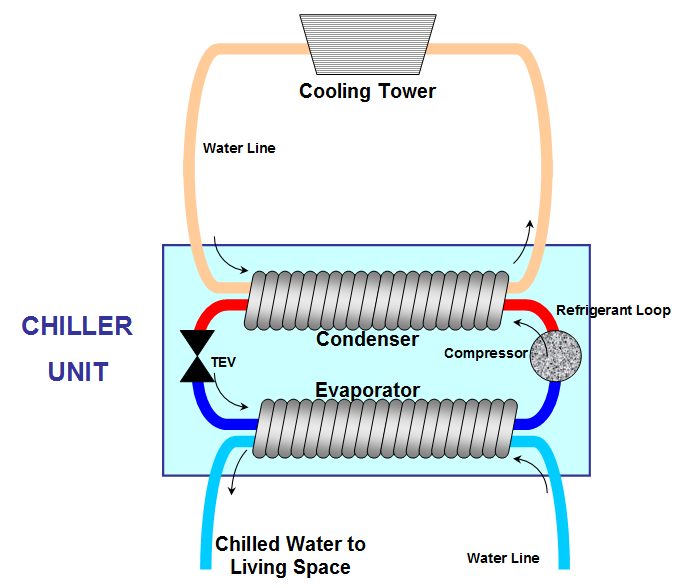
Evaparatör ile soğutma suyu soğutulur, soğutulması istenilen alanlara soğutulmuş su AHU, Funcol vb. üniteler ile aktarılır, soğutma sağlanır ve tekrar evaparatör sistemine geri dönerek çevirimini tamamlamaktadır.
Kondenser ile kopresörden çıkan akışkanın üstündeki fazla ısı havaya ve ya su ile atılır. Eğer ısı hava ile atılıyorsa hava kaynaklı soğutma grubu , suya atılıyorsa su kaynaklı soğutma grubu olarak adlandırılır.
Chiller sistemi temel olarak Su soğutmalı (açık tip kule – kapalı tip kule) ve hava soğutmalı chiller olarak ikiye ayrılır.
Bunun dışında heat pump chiller, 4 borulu chiller, free cooling chiller sistemleri de kullanılmaktadır.
Hava Soğutmalı Chiller
Chiller içerisindeki soğutucu gazın, evaporatör ve kompresör üzerinden kazandığı enerjisinin hava soğutmalı bataryalar üzerinde atması şeklinde çalışır.
Kompresörde sıkıştırılmış çok sıcak akışkan kondansere gönderilir. Fanlar yardımı ile batarya yüzeyinde hava akışı sağlanarak ısı transferi gerçekleşir. Gaz üzerindeki ısının havaya iletilmesiyle soğutma tamamlanır.
Su Soğutmalı Chiller
Su soğutmalı chiller soğutma sistemleri, hava soğutmalı chiller çalışma mantığından farklı olarak kondenser devresindeki çok sıcak akışkanı eşanjör yardımıyla su ile soğutur. Soğutma suyunun temininde su kaynakları; akarsu, toprak, deniz, soğutma kulesi veya standart su hattı olabilir.
Su soğutmalı chiller sistemlerinin cihaz hacmini minimize ettiği için benzer kapasitedeki chiller cihazına nazaran %65 daha küçük hacim sağladığını belirtmek gerekir. Aynı zamanda kompresör çalışma performansındaki yükselme sebebi ile daha düşük elektrik tüketimi yapar ve yüksek performans sağlar, tabiki su tüketimi gerçekleşmektedir.
Chiller soğutma grupları; endüstriyel üretim tesisleri başta olmak üzere, gıda ve ilaç sanayi, plastik üretim tesisleri, kozmetik imalat tesisleri, soğuk hava depoları, oteller ve hastanelerde kullanılmaktadır. Ancak her kullanım alanına uygun chiller projesi özel olarak hazırlanmalıdır.