
Vapor is formed from the liquid or solid state through evaporation or sublimation. During the evaporation of water, a dynamic equilibrium is established in which equal amounts of liquid or solid particles transition to the gaseous state and, at the same time, return from the gaseous state.
Reasons for Using Steam
• Being an ideal heat transfer medium
• The ability to carry more heat using smaller-diameter pipes
• Being environmentally friendly
• Energy savings can be achieved through recycling
• The fluid is transported by its own pressure. No pump is required. Therefore, the cost is low.
• It is possible to control the temperature with a high degree of precision.
• Steam reduces the risk of corrosion in the piping system.
• Heat loss is minimal, making it an ideal heat transfer medium. Because heat is transferred through small-diameter pipes, heat loss is lower than in other systems. It has good thermodynamic properties.
• It requires minimal investment, uses small-diameter pipes, requires little insulation, and is inexpensive to install.
• Steam is safe; that is, it is non-flammable. It is a sterile fluid.
• Steam is environmentally friendly. It is a pure substance.
The disadvantage, however, is that due to the high energy and pressure, protective measures must be taken.
Applications of Steam
• Petrochemicals
• Electricity generation at thermal power plants (steam turbines)
• The pharmaceutical and food industries for sterilization purposes
• The construction materials industry
• Steam heating systems (radiator systems)
• Refineries
• Chemical processes
• Food industry
• Sterilization (packaging and food)
• Fertilizer industry
• Rubber products and their manufacture
• Construction materials industry
• Paper industry
• Woodworking and wood shaping
Steam Boilers
It is a pressurized, sealed vessel used to produce steam from water at the desired temperature, pressure, and volume, either through the combustion of any fuel (solid, liquid, or gas) or by using an electrical or nuclear energy source.
The most significant issues encountered in steam boilers are scaling and corrosion. Corrosion causes holes to form in the pipes and the boiler itself. This results in lost time and financial loss. Scale buildup, on the other hand, reduces thermal efficiency, which means more fuel is required to produce the same amount of steam. In other words, this also results in energy loss and financial loss. Proper chemical treatment is crucial for preventing scale buildup and corrosion in boilers.
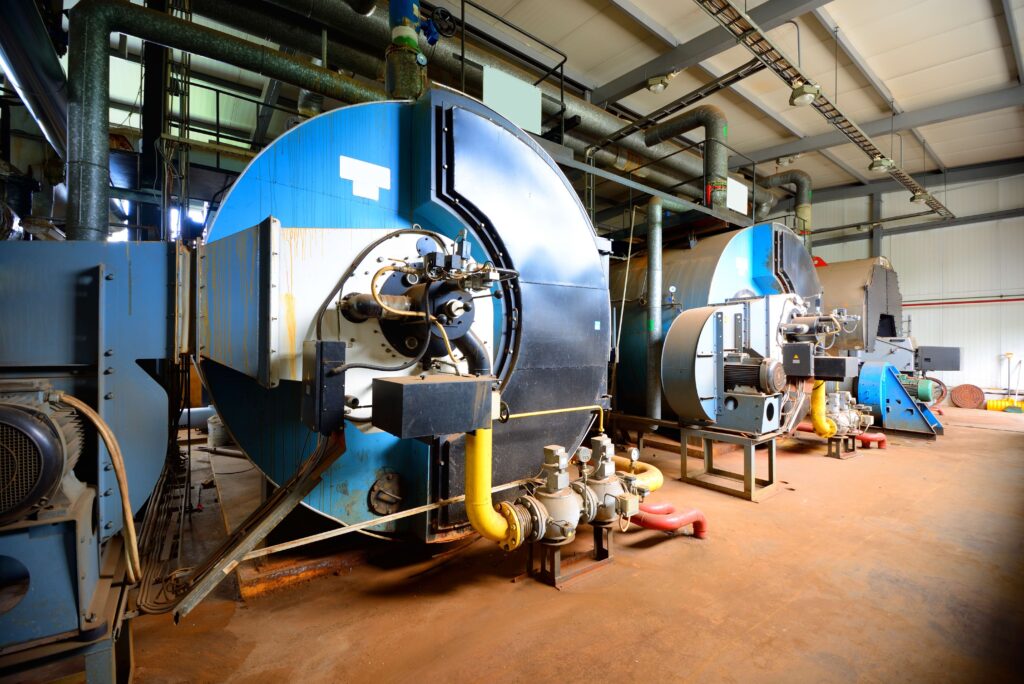
Before we begin optimizing these steam boilers, we always calculate and report the annual savings in natural gas, water, and electricity. At the end of each year, we calculate the differences between our projections and actual results, review them with our customers, and prepare the plan for the following year. At Cemkimsan, we believe that transparency and accountability are the cornerstones of our work.