Membrane Technology and Antiscalant
Although water stress in our country is currently recorded at a low level, we would like to remind you that projections indicate we will be among the countries facing water scarcity by the 2050s. (OECD report, 2009; OECD statistics, 2017).
At this point, membrane technology emerges as a key process in wastewater recovery.
Although membrane separation processes have been known since the 1930s, membranes became more practical after Loeb and Sourşrajan developed the “skinned” reverse osmosis (RO) membrane in 1959. However, the higher flux and rejection rates achieved with the thin-film composite RO membranes developed by Cadotte in 1972 led to the more widespread use of RO membranes. Since then, RO and other membrane technologies have become more widely recognized, and their applications have expanded.
A membrane is defined as a selectively permeable barrier between two homogeneous phases.
Membrane separation technologies that use pressure as the driving force rely on the process of passing water through the membrane as a result of the pressure difference between the feed side and the product side of the membrane. In this way, water can be recovered from solutions containing both suspended solids and dissolved solids.
It is an important separation material because it acts as a barrier against various pollutants based on its selectivity and properties. Systems developed using this material offer significant advantages, including excellent effluent water quality, a small footprint, minimal construction requirements, the ability to be automated, and very low chemical usage.
Membranes are classified based on pore size, geometric shape, structure and morphology, material, and separation process. Commonly used membrane processes include microfiltration (MF), ultrafiltration (UF), nanofiltration (NF), reverse osmosis (RO), and advanced osmosis (AO).
The problem of water scarcity, resulting from the growth of the world’s population and industrial sectors, is driving humanity to develop advanced water treatment technologies, produce innovative membrane processes, and improve the critical properties of membranes. Membranes are generally used in the treatment of drinking water, domestic and industrial wastewater; in gas separation; in electrochemical processes; in the biomedical field for blood and urine dialysis and oxygenation; in membrane-based sensors; and in controlled drug delivery, among other applications.
Despite its many advantages, membrane fouling is the most significant operational problem hindering the widespread adoption of this technology.
In membrane systems, the water passing through the membrane emerges with a high degree of purity, while a high concentration of impurities remains on the membrane. When these impurities reach a certain concentration, they form crystals that build up, impairing the membrane’s ability to allow water to pass through and eventually causing the system to clog.
For this reason, the use of antiscalants is necessary in membrane systems.
When added to the feedwater of a membrane process, antiscalant delays the precipitation/crystallization points of salts present in the water (CaCO₃, CaSO₄, SiO₂, BaSO₄, MgSO₄, CaF₂, etc.) and reduces fouling through its high capacity to dissolve scale and contaminants. This extends the service life of the membranes.
When the selected antiscalant is applied correctly, it significantly delays crystallization, thereby causing blockages to occur much later. The need for sulfuric acid and hydrochloric acid is reduced, and the risks associated with the use of these chemicals are minimized. Operating costs, as well as cleaning and maintenance costs, are reduced. It enables a higher recovery rate in reverse osmosis systems, allows the system to operate for longer periods, reduces the concentrate flow rate, and extends membrane life.
Membranes that are clogged or have developed bacterial growth can be cleaned with membrane-cleaning chemicals and restored to a usable condition.
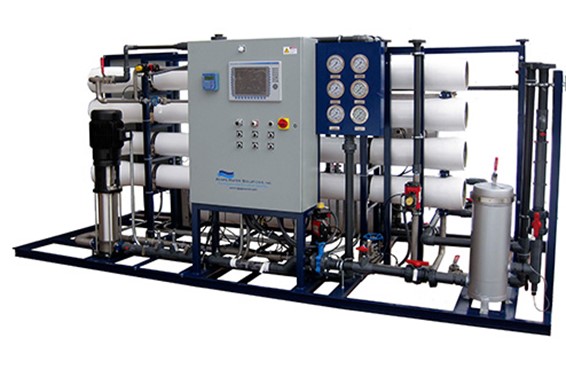
At Cemkimsan Kimya, we have developed and manufacture at our plant our antiscalant products;
C-SCALANT 6080: A protective product for membranes fed with water containing high levels of silica. It prevents membrane fouling and extends their useful service life.
C-SCALANT 2005: A membrane protection product. It prevents membrane clogging or a decrease in capacity and extends their useful service life.
C-SCALANT 1085: A membrane protection product. It prevents membrane clogging or capacity loss and extends the useful service life of the membranes. Suitable for use in drinking water production facilities. NSF-certified.
C-SCALANT 1080: This product protects membranes. It prevents membrane clogging or a decrease in capacity and extends their useful service life.
When cleaning membranes that have become clogged and harbor bacteria;
C-MEC 102: Acidic membrane cleaner; used to clean membranes whose pure water production capacity has decreased due to scale and similar contaminants. It is an acidic product with a low pH value.
C-MEC 100: An organic acidic membrane cleaner used to clean membranes whose pure water production capacity has decreased due to scale and similar contaminants. It is an acidic product with a low pH value.
C-MEC 200: Basic membrane cleaner; used to clean membranes whose pure water production capacity has decreased due to colloidal and similar contaminants. It is a basic product with a high pH value.
C-MEC 17: Membrane Disinfectant is a membrane cleaning chemical used to remove biological deposits that accumulate on R.O. membranes over time.
Source:
www.cevresehirkutuphanesi.com: Membrane Technologies and Applications
www.cemkimsan.com.tr; Why Should Antiscalant Be Used?
TMMOB Chamber of Chemical Engineers; Water Handbook
Cemkimsan Chemistry Lecture Notes